
Current exhibition
Marianne Aue. Unknown Zero
01.03.2026 – 24.05.2026
Marianne Aue *1932 in Freudenthal, now Bruntál, †2016 in Leverkusen, was one of the earliest representatives of the post-war avant-garde in Europe. She studied at the School of Applied Arts in Krefeld in the 1950s, where she gained her artistic skills. From the early 1960s onwards, she created works that showed a stylistic affinity with the ZERO artists working in nearby Düsseldorf. The ZERO movement, founded in 1957 by Heinz Mack and Otto Piene and shortly afterwards joined by Günther Uecker, was committed to making a ‘new start’ without the burden of artistic ideologies after the horrors of the Second World War, hence the name ZERO. The aim was to create art that used light, movement, space and serial thinking to convey new sensory experiences, thus leaving traditional painting behind. Although Marianne Aue was not part of the inner circle of ZERO founders, her works take up some of the central ZERO premises, such as serial, rhythmic structures, the integration of light and shadow, and the breaking away from classical easel painting in favour of spatial effects. Her artistic approach goes far beyond the traditional image and combines conceptual
rigour with exploratory materiality.
Aue‘s art is primarily characterised by monochrome structural reliefs situated between painting and sculpture. She intensively explored the interplay of light and shadow, an approach she concisely described with the words, ‘What I need for my work is shadow,’ which illustrates how much her art makes the pictorial space tangible in a physical sense. Aspects of ZERO aesthetics are touched upon, as are later concepts of kinetic and op art-related works, which focus on visual perception and movement in space. Aue‘s works often oscillate between abstract painting and sculptural relief: serially arranged lines and repetitive materials create an interplay of light, shadow and form that only becomes visible in space. The works are often geometrically organised and show a kind of visualisation of movement through repetition and variation of elements. Monochrome surfaces or reduced colour compositions often dominate, creating additional depth through the shadows cast by the three-dimensional elements. Some of her compositions are reminiscent of acoustic pieces or sound elements, in particular the work ‘Vibration’ from 1964.
The delicate monotypes she created in the early 1960s also form an important part of her oeuvre. These too feature structural hatching and repetitions that lend the image a rhythmic movement, similar to her relief works. Using printmaking techniques, Aue creates an exciting interplay between light and darkness, evoking a dynamic flow.
Marianne Aue was active as an artist for less than ten years before she presumably ended her career for family reasons. As a result, her work remained unnoticed for a long time. In recent years, her estate has been rediscovered, presented for the first time as part of the European avant-garde and placed in the context of various historical movements beyond conventional categorisations. The exhibition ‘Marianne Aue: Pictorial Action’ at the Kunstmuseum Gelsenkirchen at the end of 2024 was the first solo museum exhibition since the 1960s.
Based on current research, the Ludwig Museum has now established a close connection to the exhibition activities of the international Nouvelles Tendances and placed it in the stimulating artistic environment of Piero Manzoni, Yves Klein, Jean Tinguely, Jésus Rafael Soto and others. As the only woman, Marianne Aue succeeded with her works and is considered a pioneer in both groups.
The exhibition is sponsored by the Gallery Zdeněk Sklenář in Prague and the Association of Friends of the Middle Rhine Museum and Ludwig Museum in Koblenz.
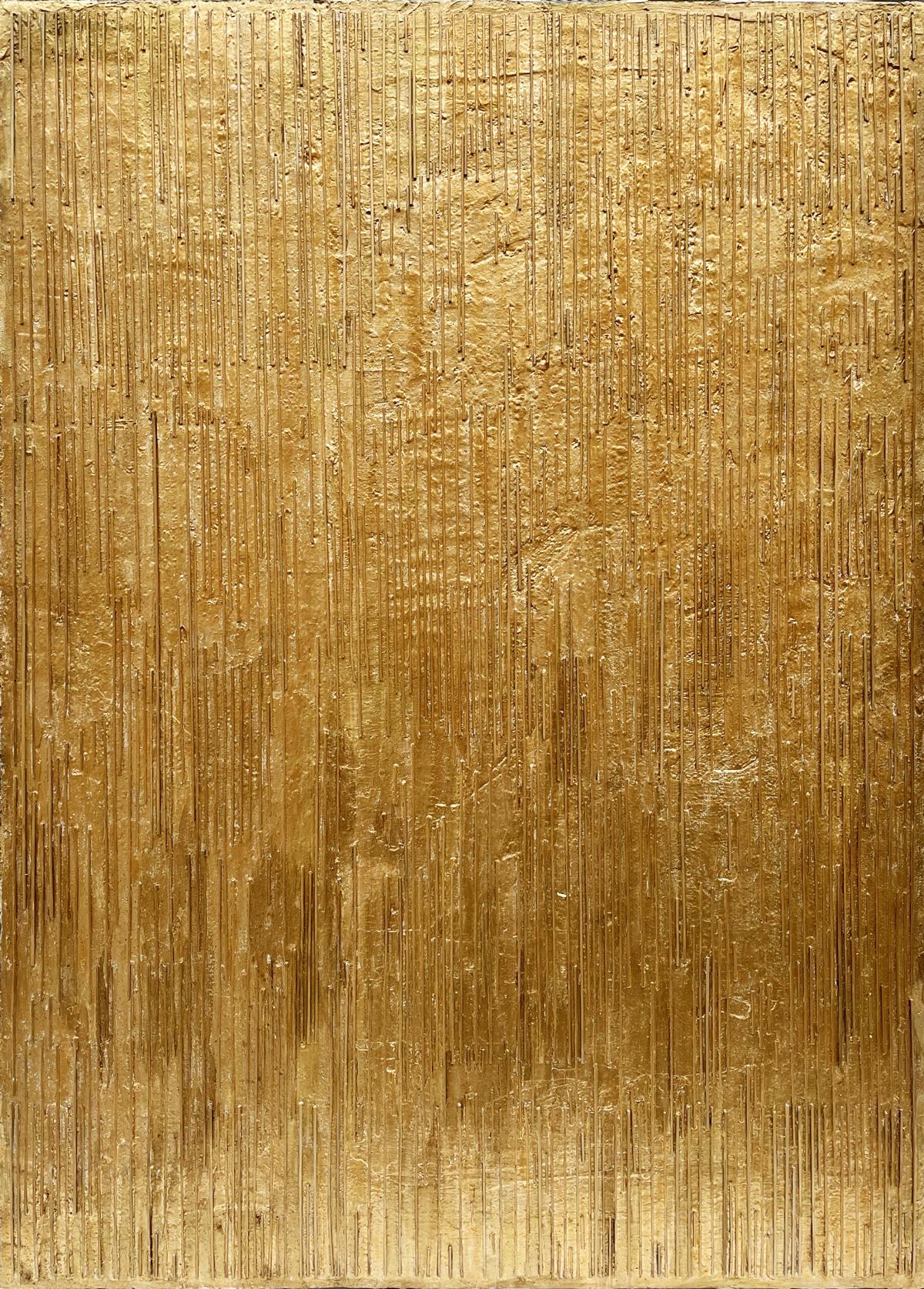
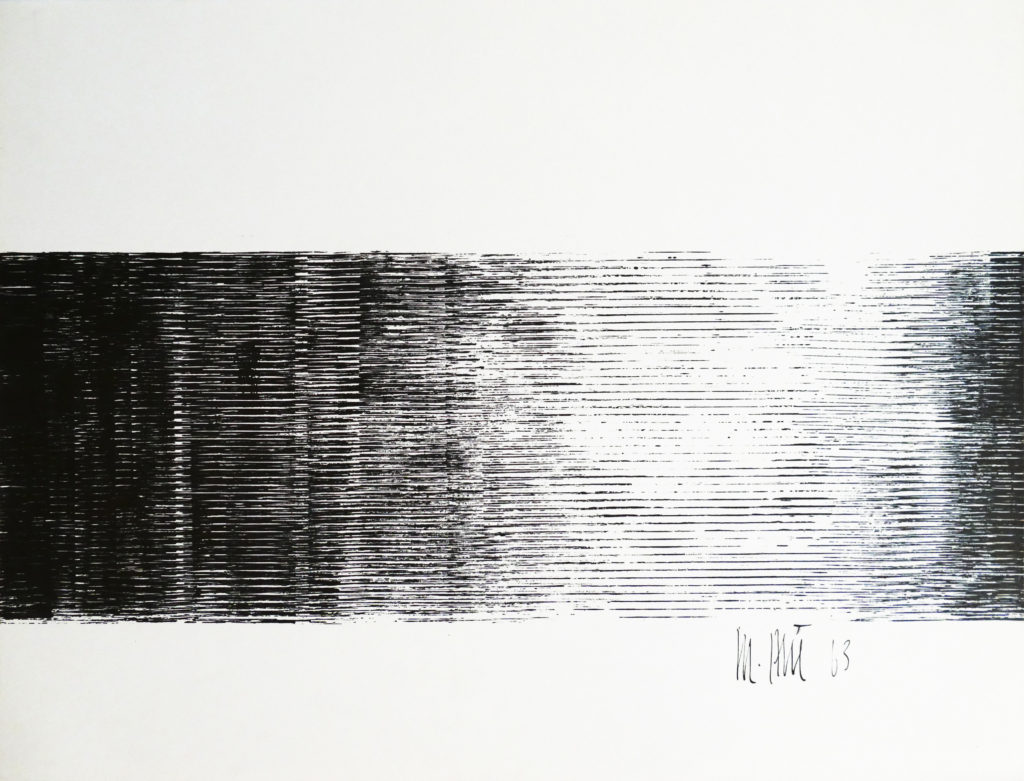
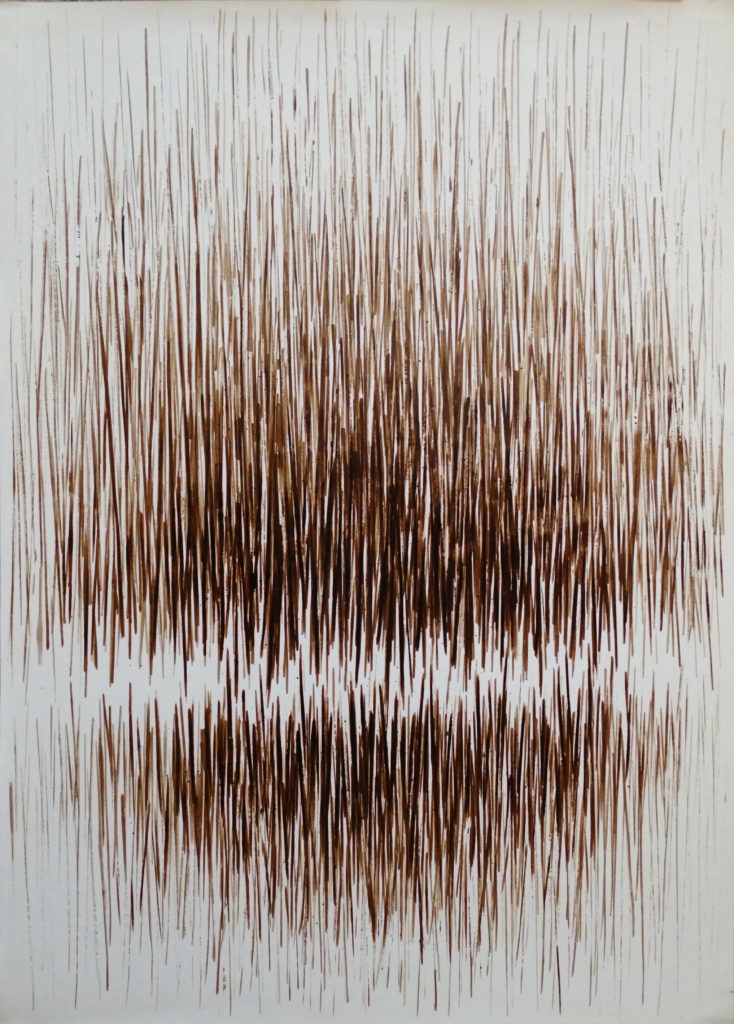
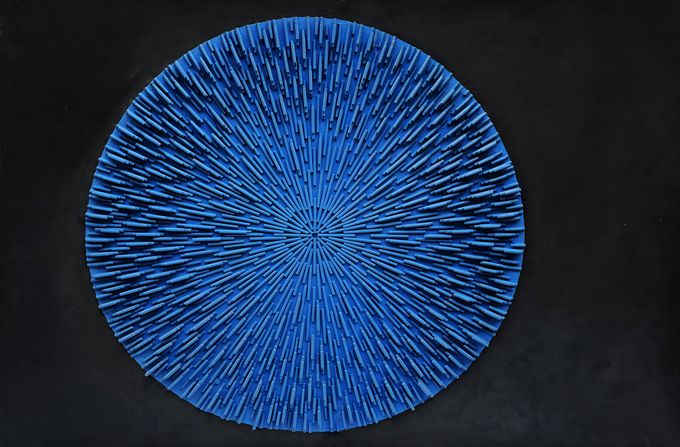
Marianne Aue „Nr. 153“, 1964. © Nachlass Marianne Aue, Foto: Galerie Panarte, Wien